South Australian Aviation Museum
AIRCRAFT PROFILE
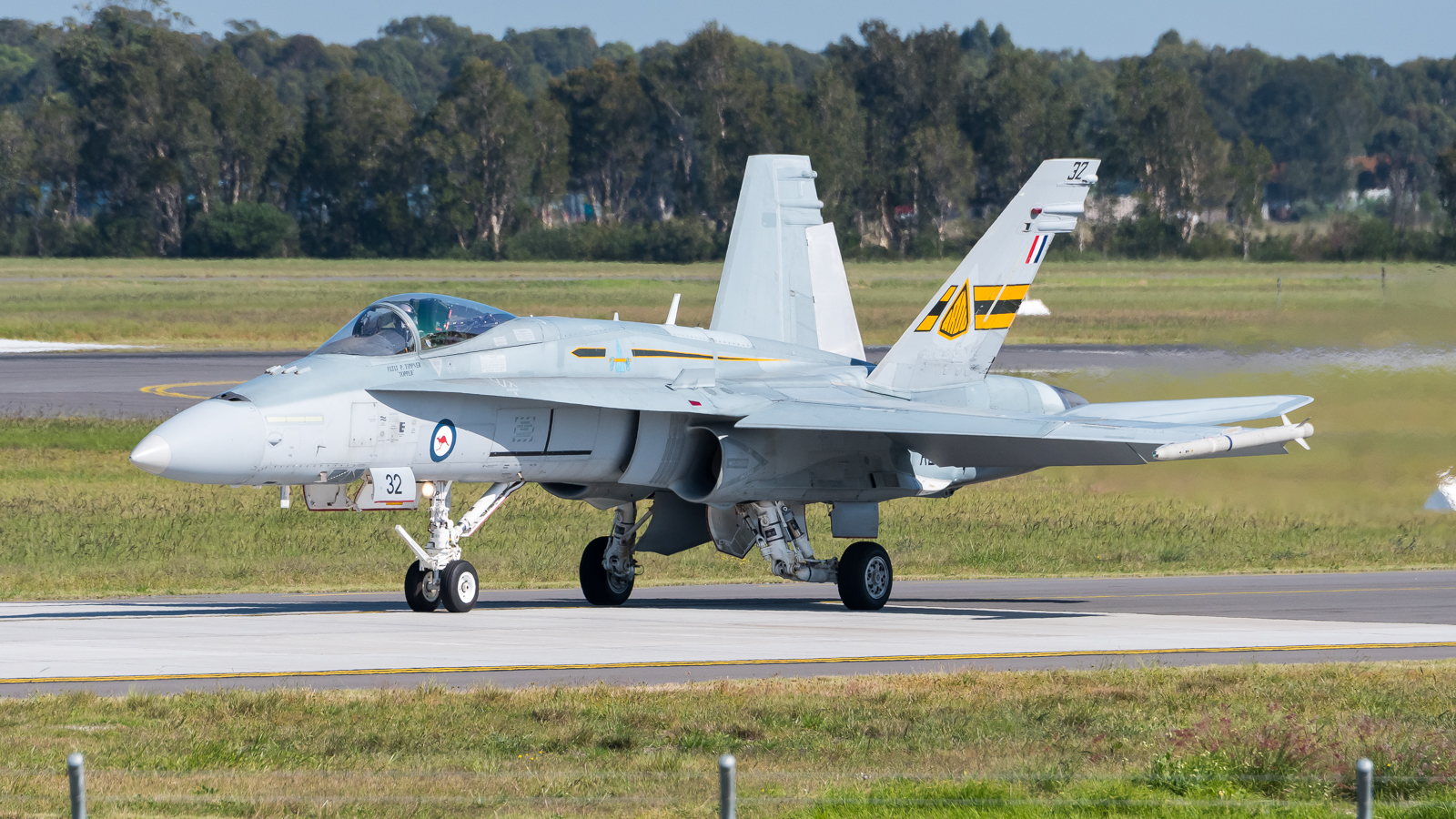
McDonnell Douglas Boeing F/A-18A Hornet A21-32
McDonnell Douglas Boeing F/A-18A Hornet A21-32
A21-32 was ordered 11/1981 and was delivered to the RAAF 16 Aug 1988. It was one of two Hornets fitted with flight test instrumentation, the other was A21-101, a Block 14 B two-seat model. A21-32 was on static display at Laverton Airshow in 1988, which was the debut of the RAAF Hornets. It initially served with 3SQN and was in service at ARDU (Edinburgh S.A.) for many years. A21-32 was known to have conducted many tests at Woomera, some of which are listed below.
Fatigue trial - 1996-7
The RAAF were concerned by F/A-18 tail fin fatigue. SQNLDR Maneschi was tasked to fly the instrumented A21-32 aircraft in a variety of flight profiles, mostly with very high g-loads. It was often flying for 30 minutes at sustained g-forces up to 7.5g, and SQNLDR Maneschi reported that he would return exhausted and bruised. The fatigue instrumentation was telemetered in flight real-time. Subsequently, the RAAF made adjustments to F/A-18 operational limits to preserve the airframes.
Longshot - 1997
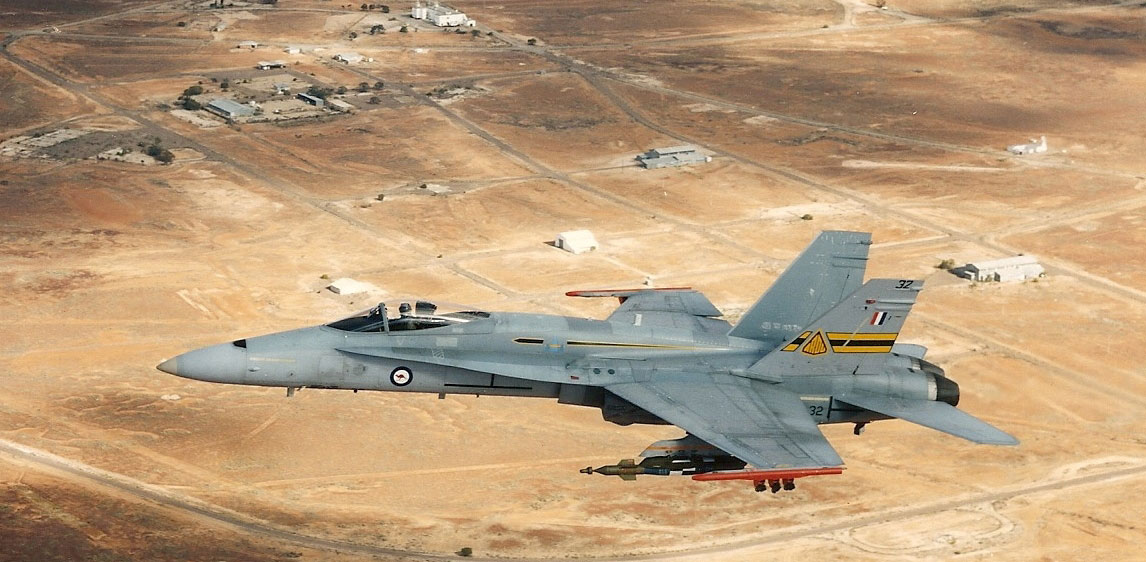
SQNLDR Maneschi worked closely with SQNLDR Whalley, and "gunnies" from ASCENG, at Woomera, on a standoff weapon kit called Longshot. The Longshot kit was attached to a standard GBU-12 laser guided bomb. The Longshot wings would deploy upon weapon release from the F/A-18 and allow the weapon to glide a long way to the target. Approaching the target, the Longshot wings would separate and the GBU-12 would continue to target under laser guidance. Several weapons were released at a variety of test conditions. The Longshot kit was never procured for RAAF use. Photo courtesy of SQNLDR Steve Maneschi, who was flying ARDU Hornet A21-101 in support. The orange wingtips are camera mounts.

A21-32 chasing the longshot. Photo courtesy of SQNLDR Steve Maneschi
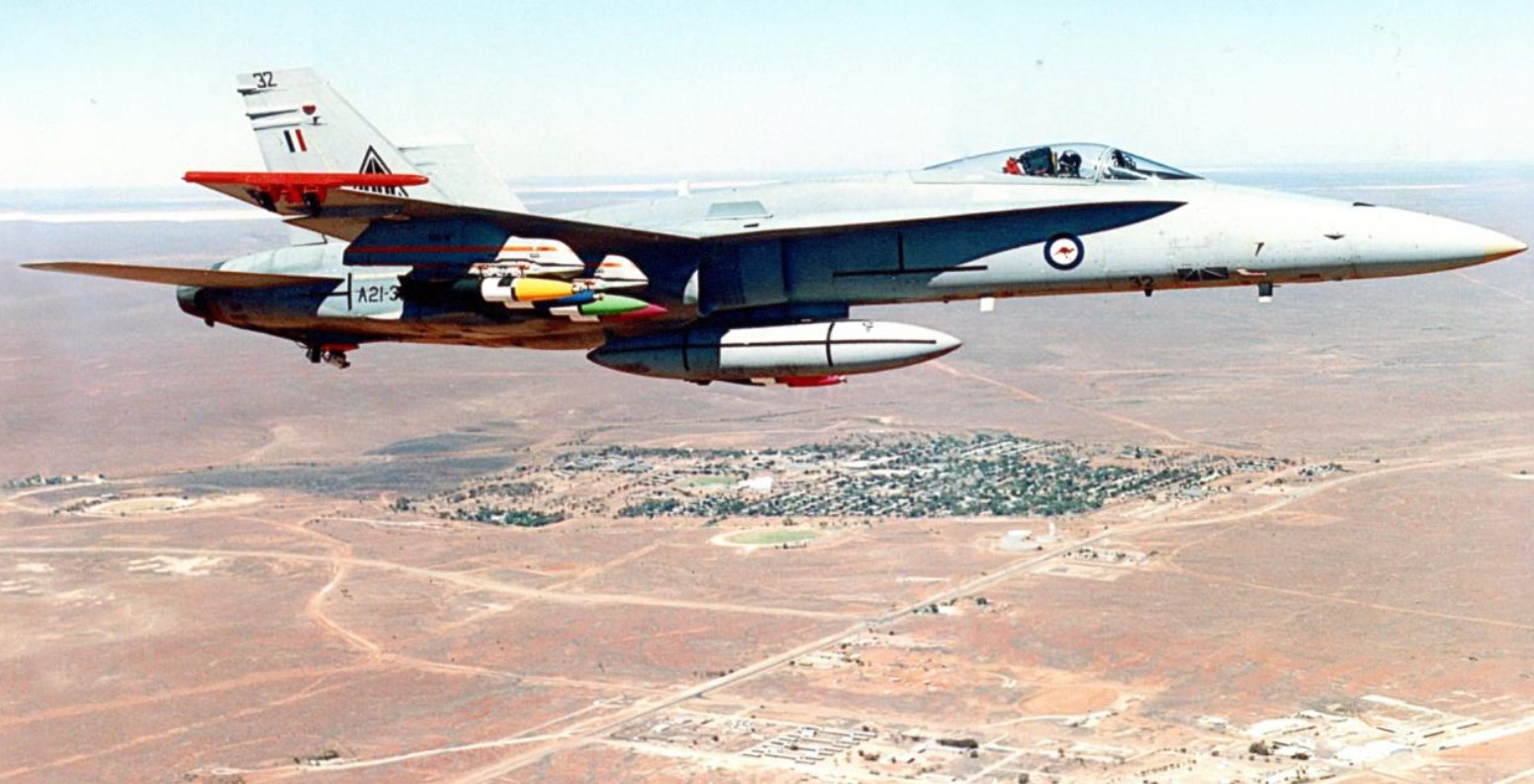
A21-32 at Woomera (most likely before 1994) loaded with 8 x Mk-82HD Snakeye inert bombs. The different colours in this case would allow weapon impact dispersion to be accurately and technically assessed. With 4 pylons and 8 weapons, the drag increases dramatically. Fuel consumption would become an issue, so carriage of the extra fuel may have been beneficial to the test program, or maybe engineers wanted to observe the near-field airflow effect of aircraft / fuel tank on weapon separation. The aircraft is fitted with high-speed cinematic cameras to both wingtips and the rear belly. The cameras activate prior to weapon release. Cine film was typically unloaded, then flown from Woomera to Edinburgh for processing, then flown back up asap, for the flight test Task Team to review, prior to the next flight.
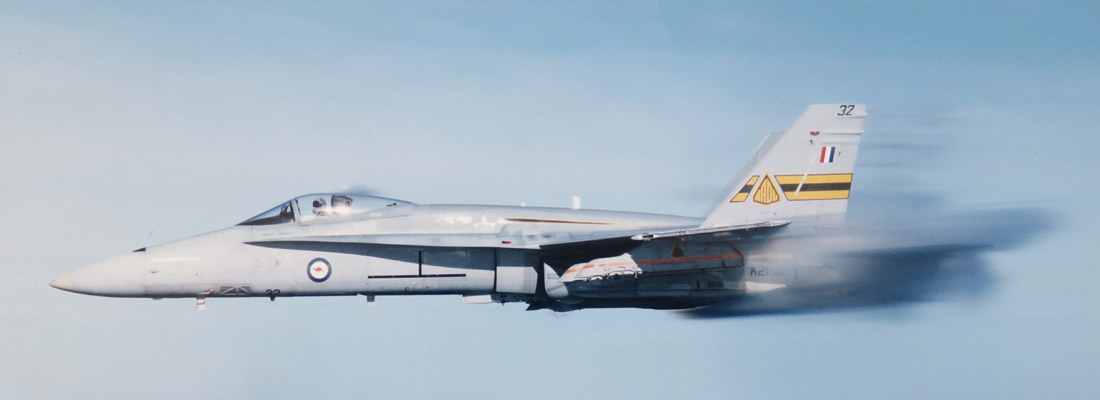
On 10 Aug 1999 SQNLDR Whalley and SQNLDR Maneschi flew both ARDU F/A-18s in formation on a flight test south of Kangaroo Island. At one point during the flight this photograph was taken from A21-101 (flown by SQNLDR Whalley and a 92 Wing photographer) of A21-32, flown by SQNLDR Maneschi. The photo is interesting and unique as it was taken at Mach 1.02, at 1,000 feet above sea level, and it shows the ectoplasm (condensation) formed around the airframe due to air moisture at transonic speed.
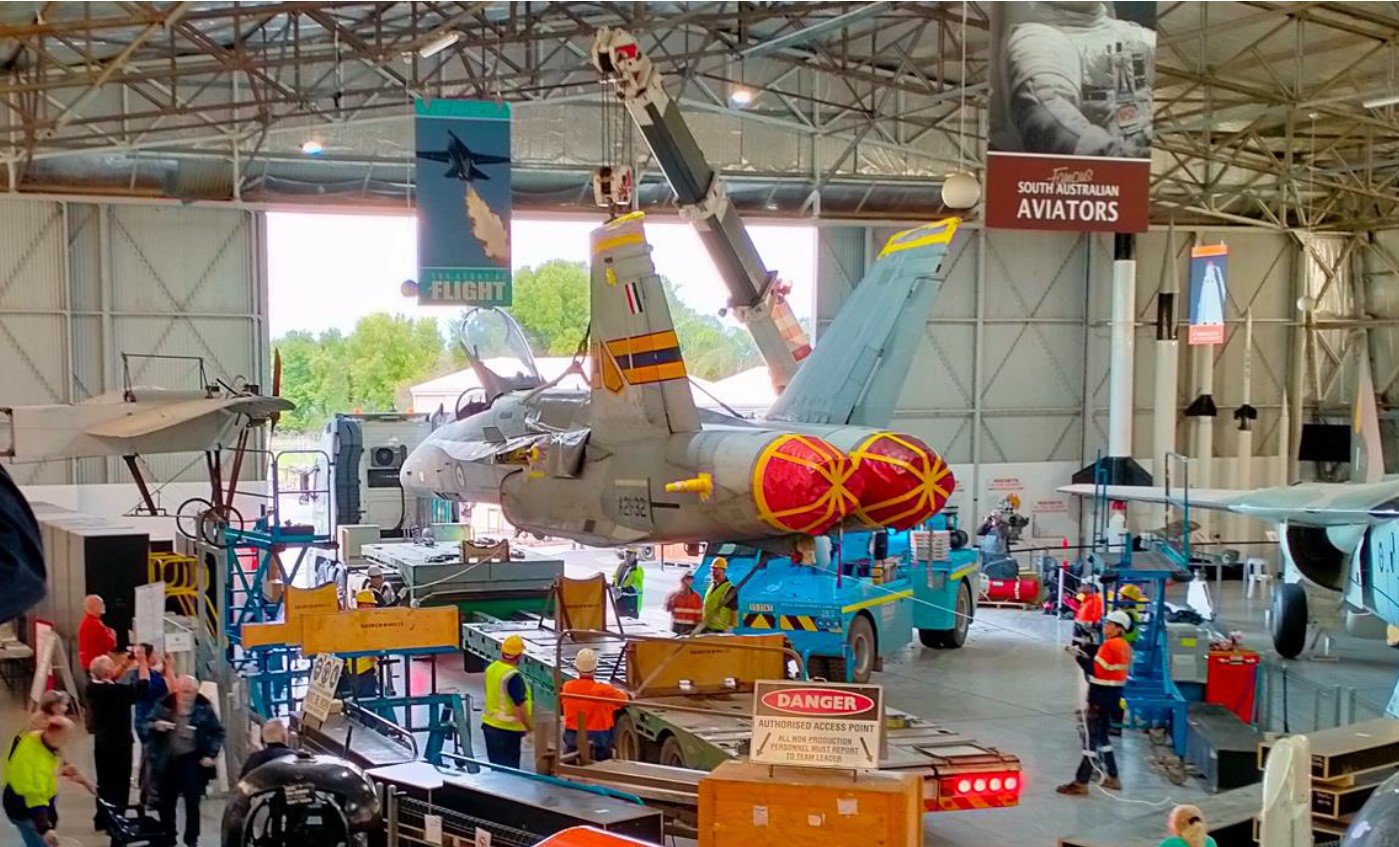
In Dec 2021, the Hornets were retired after nearly 40 years of service. Eight F/A-18 Hornets were identified as important heritage aircraft (including A21-32). One Hornet was allocated to each state with A21-32 allocated to the South Australian Aviation Museum. Boeing Defence prepared each aircraft by removing military software, hardware and chemicals for security and safety reasons before dismantling. Next, the wingless fuselage was lifted by crane onto the back of a semi-trailer for road transportation along with 22 boxes containing the wings and all other parts. Under the final stage, a team of six technicians spent approximately five weeks reassembling each aircraft at its new home. A21-32 was delivered to the South Australian Aviation Museum on 16 June 2022.
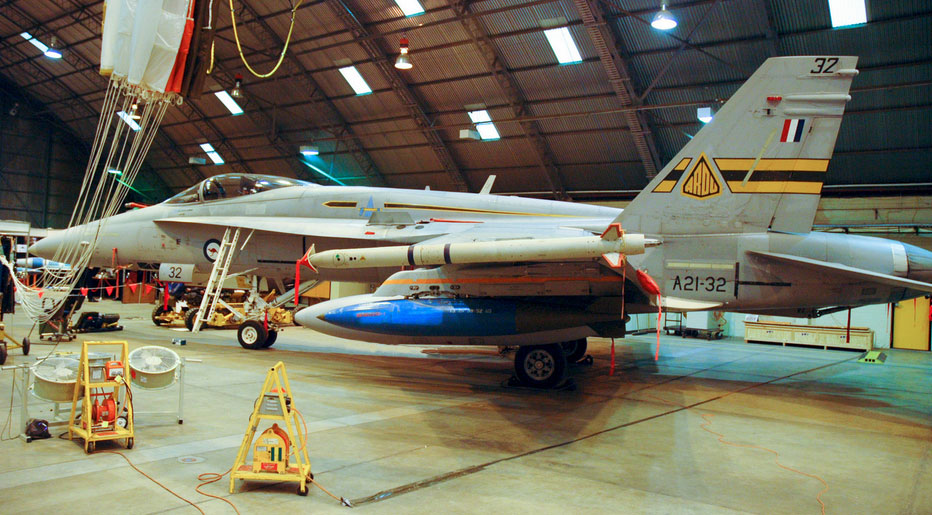
In 2007, A21-32 was on display at the Edinburgh Air Show
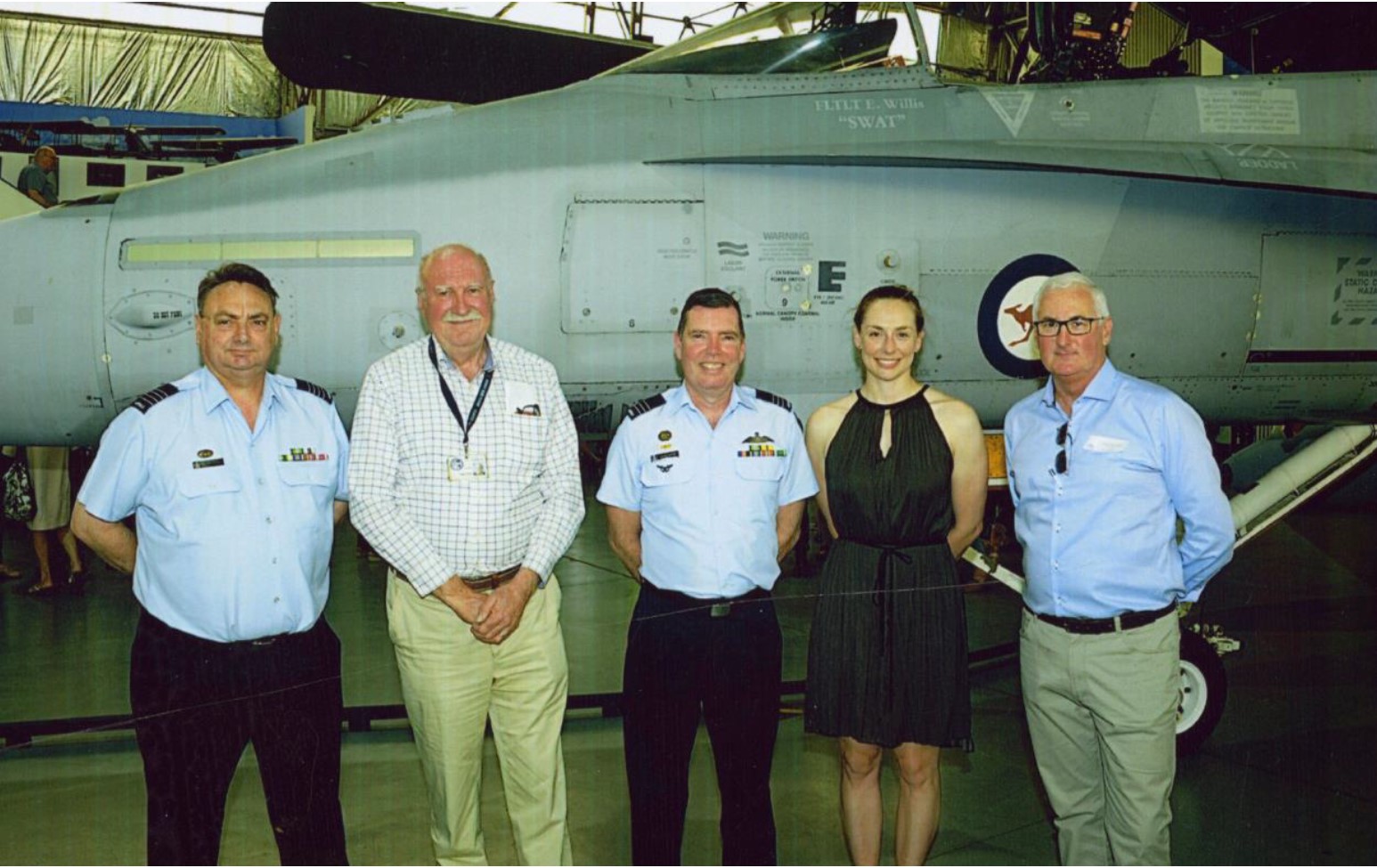
At the official handover of the ARDU Hornet F/A-18A A21-32 to S.A.A.M..
L to R Group Captain Greg Weller, S.A.A.M. President Nigel Daw, Wing Commander Scott Barter (C.O. ARDU) and two pilots who flew our F/A-18, Flight Lieutenant E. Willis (callsign SWAT) and S.A.A.M. Patron Jim Whalley.
SQNLDR Steve Maneschi, the only RAAF pilot to have flown SAAM's Hornet A21-132, SAAM's F-111 A8-132 and SAAM's Pilatus PC-9/A A23-045