South Australian Aviation Museum
AIRCRAFT PROFILE
General Dynamics F-111C A8-132 (ARDU)
General Dynamics F-111C A8-132 (ARDU)
Aardvark
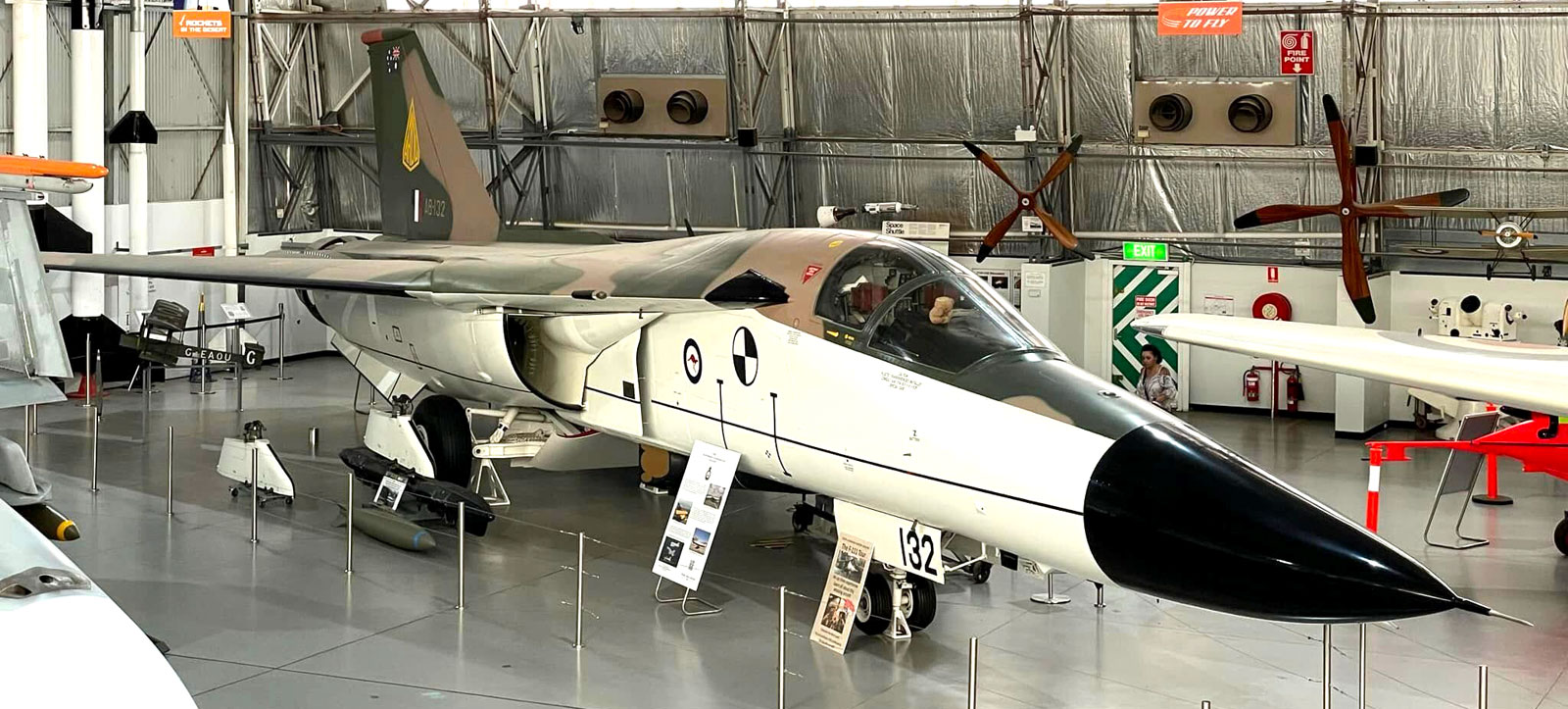
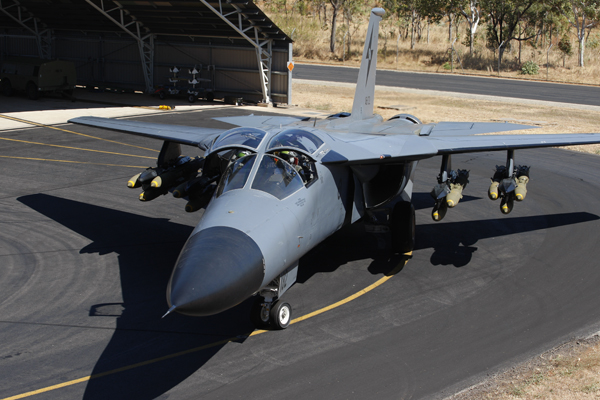
The F-111 was nicknamed "Aardvark" in the United States due to its long, drooping nose, which resembled the snout of the African mammal of the same name (the Aardvark itself was sometimes referred to as a 'ground pig'). The distinctive long nose of the F-111 was fitted with terrain-following radar, which allowed it to fly low and fast over varied terrain. The F-111 was often called 'The Pig' by the Royal Australian Air Force (RAAF) pilots and crews.
General Dynamics F-111C A8-132 was the eighth F-111 from the production line allocated to the RAAF and made its first flight on 21 October 1968. It was delivered to RAAF Amberley on 25 July 1973 following a period in storage in the United States due to concerns about the type's serviceability. After service with 1 SQN it was allocated to the Aircraft Research and Development Unit (ARDU) at Edinburgh in 1979 and remained there until 1988. Its primary role at ARDU was testing and clearance of new systems and weapons for service use, completing over 30 trials programs including a range of guided and unguided weapons including the Harpoon missile. During this period it was given a special paint scheme of camouflaged upper surfaces and white lower surfaces to provide contrast in images of weapons release during trials.
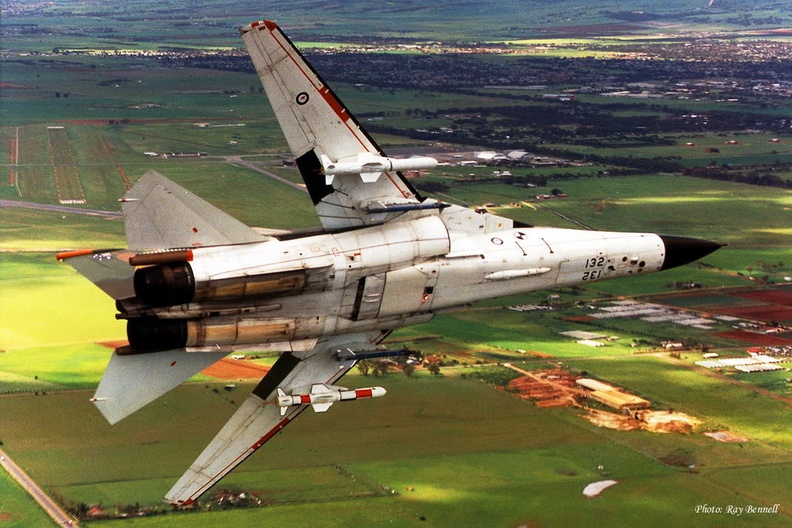 A8-132 over Edinburgh carrying 2 x AGM-84 Harpoon anti-ship missiles on stations 3 and 6, plus 2 x AIM-9L Sidewinder Air-to-air missiles on stations 4 and 5.
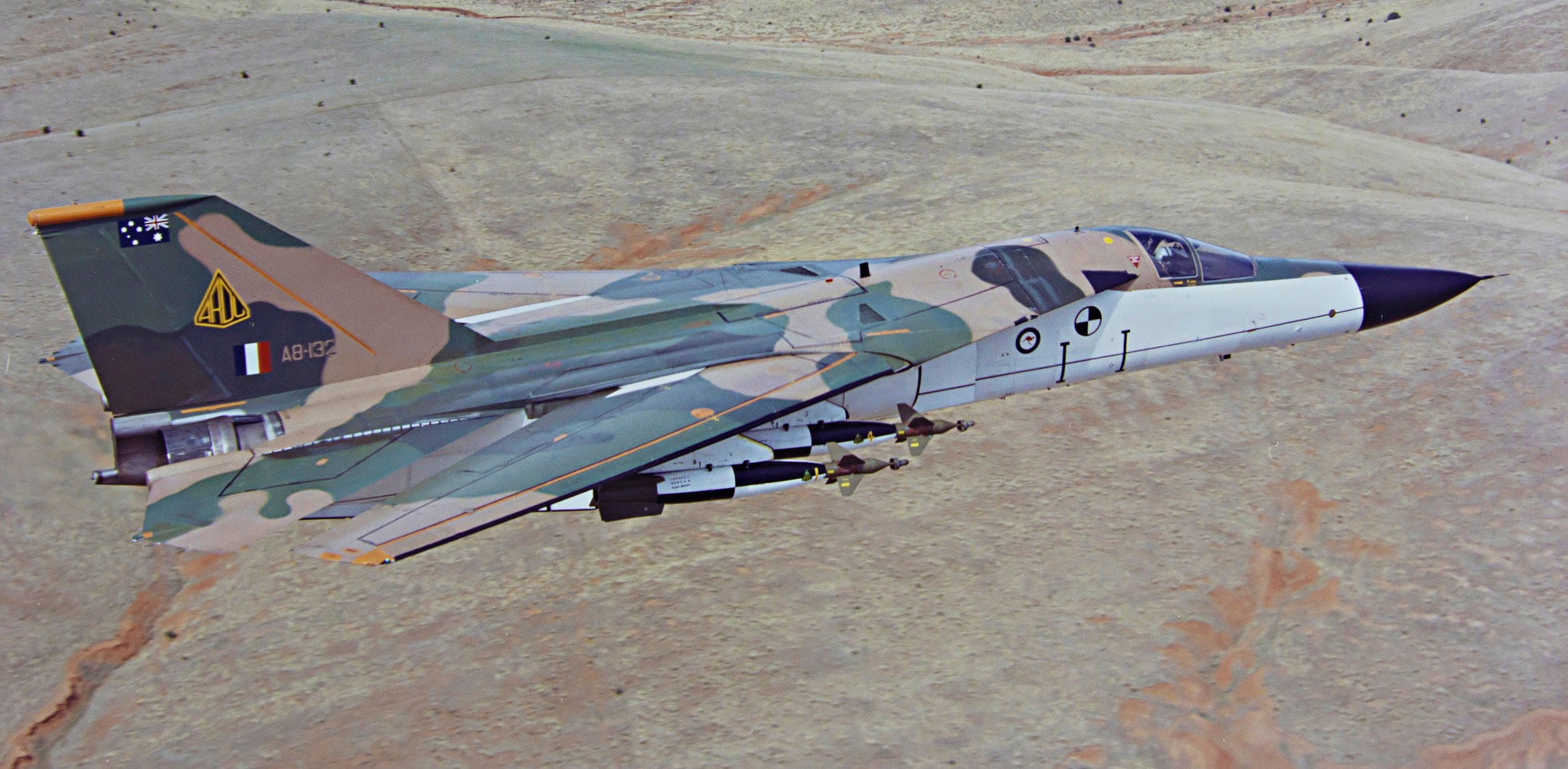 A21-132 carrying GBU-10 Paveway II Laser Guided Bombs (standard MK-84 2,000lb bombs with laser guidance kits attached).
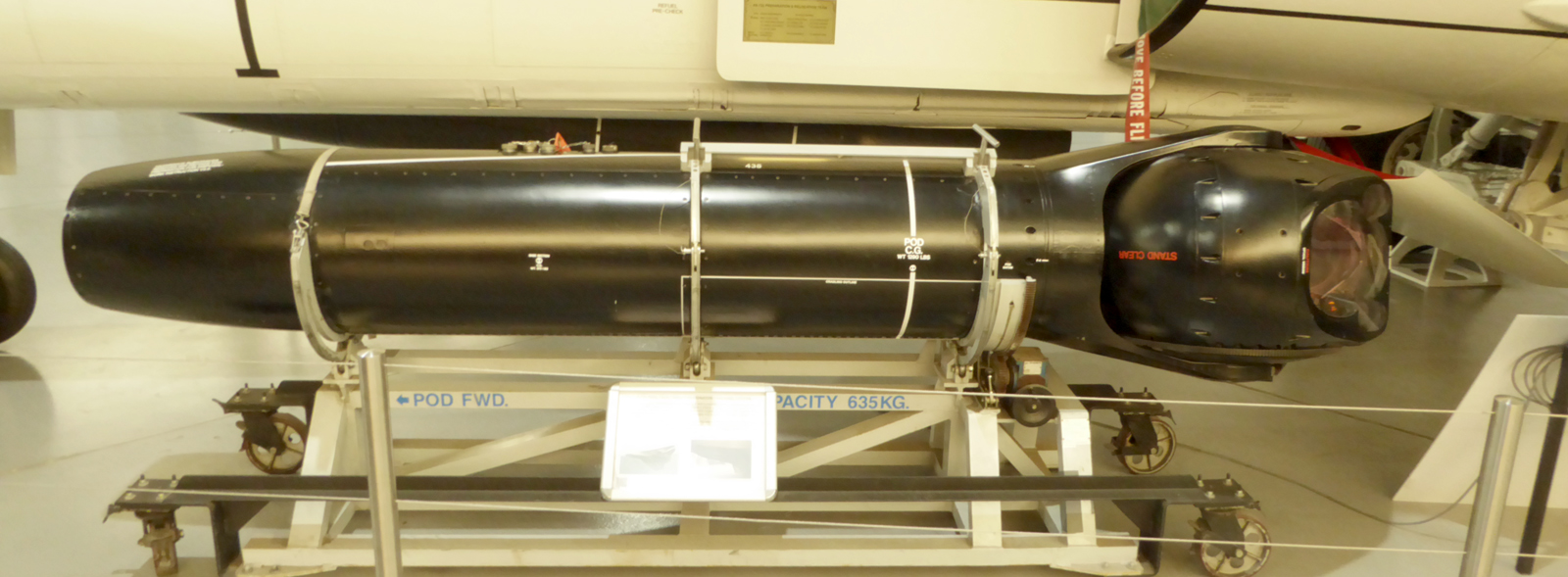
SAAM's Pave Tack (Laser Guidance Pod)
In 1998, A8-132 returned to service with 1 SQN as a strike fighter but was subsequently returned to its trials role when it served as a prototype for a major avionics upgrade programme (AUP) in 1992 and also for an engine replacement programme following the purchase by the RAAF of upgraded engine stocks following the retirement of the F-111 from USAF service. Following these major projects, the aircraft was returned to squadron service with 1 SQN in 1996, and participated in a number of major exercises and airshows both within Australia and overseas. A8-132 was retired with all remaining RAAF F-111s at the end of 2010. In 2011 it was returned to its ARDU colour scheme and transported to RAAF Edinburgh for display.
A8-132 was exchanged for SAAM's original RF-111C A8-134 which has been transferred to the Australian War Memorial. With its history of testing and clearance all F-111 related weapons and systems at ARDU and also being the prototype aircraft for the avionics upgrade and engine upgrade, A8-132 is one of the most significant of all RAAF F-111s.
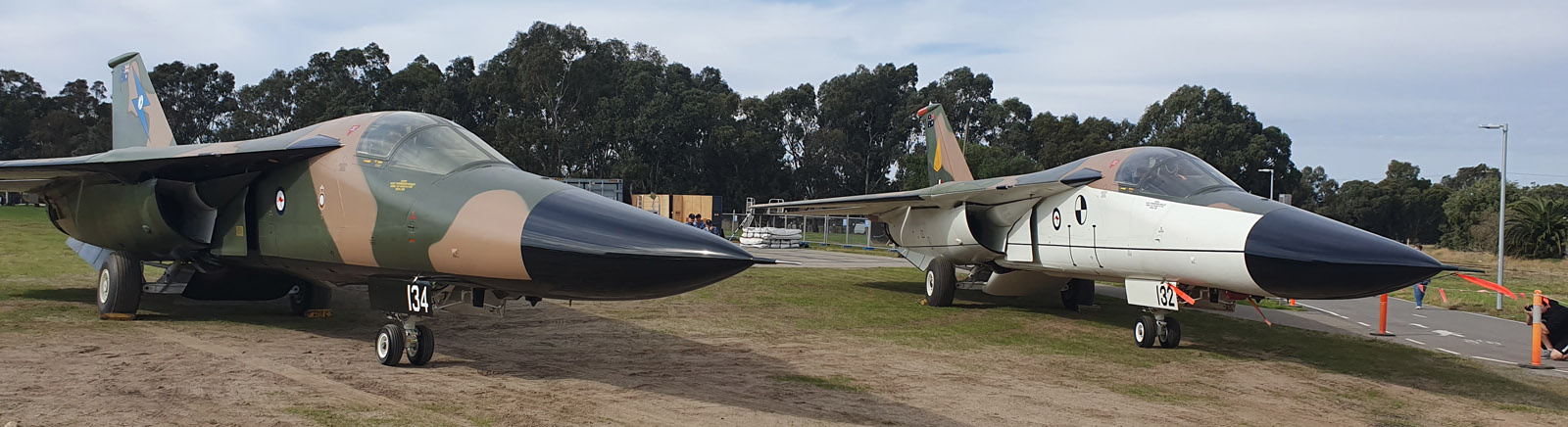 A8-134 and A8-132 side by side at SAAM. Possibly the last time two F-111's would be seen together.
A8-134 and A8-132 side by side at SAAM. Possibly the last time two F-111's would be seen together.
Technical Specifications
Engines: 2 x P&W TF30-P-109RA turbofans
Maximum take-off weight: 51,955 kg (114,300 lb)
Length: 23.5 m
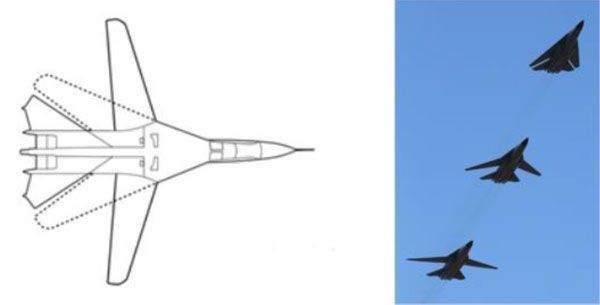
Wingspan: Spread: 21.3 m Swept: 10.4 m
Height: 5.22 m
Maximum speed: Mach 2.5 (1,475 kt; 2,655 kph) at high altitude
Combat radius: 1,160 nm (2,140 km)
Ferry range: 3,000 nm (5,560 km)
Crew: 2 – pilot and navigator/weapons system operator
Engines: 2 x P&W TF30-P-109RA turbofans
Maximum take-off weight: 51,955 kg (114,300 lb)
Length: 23.5 m
Wingspan: Spread: 21.3 m Swept: 10.4 m
Height: 5.22 m
Maximum speed: Mach 2.5 (1,475 kt; 2,655 kph) at high altitude
Combat radius: 1,160 nm (2,140 km)
Ferry range: 3,000 nm (5,560 km)
Crew: 2 – pilot and navigator/weapons system operator