South Australian Aviation Museum
AIRCRAFT PROFILE
Clyde Cessna Silverwing Replica
Clyde Cessna Silverwing Replica
Cessna CC-1 (Replica)
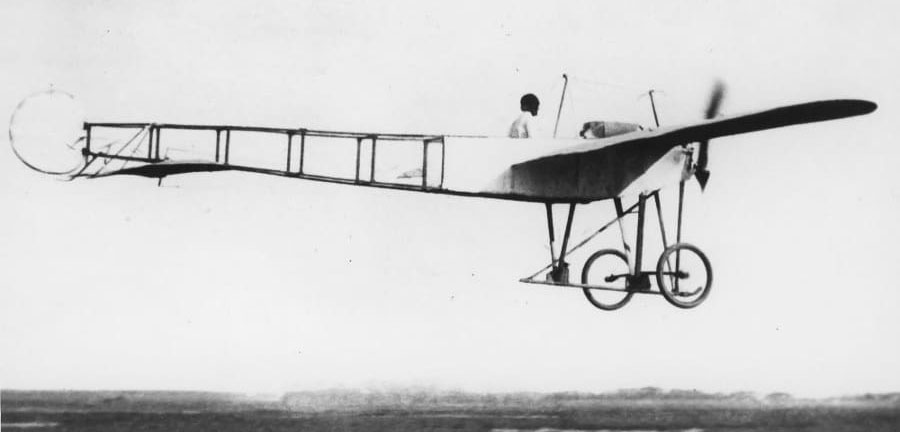
Clyde Cessna, assisted by his brother Roy, built and flew their first airplane 'Silverwing' on the Great Salt Plains near Jet, Oklahoma, USA. It had a spruce airframe covered with linen. Anzani manufactured motor cycle engines and the Cessna engine was adapted from a single cylinder design by adding two additional cylinders engine at sixty degrees to the original in a 'fan' arrangement. Flight control of the Cessna aircraft was by wing flexing, and the aircraft had a then unique fully flying tailplane. The original aircraft is presumed to have been lost to history. There are two replicas known to have been constructed, one is located at the Cessna Aircraft Company Head Office in Kansas, USA and the other located at the South Australian Aviation Museum in Port Adelaide, South Australia.
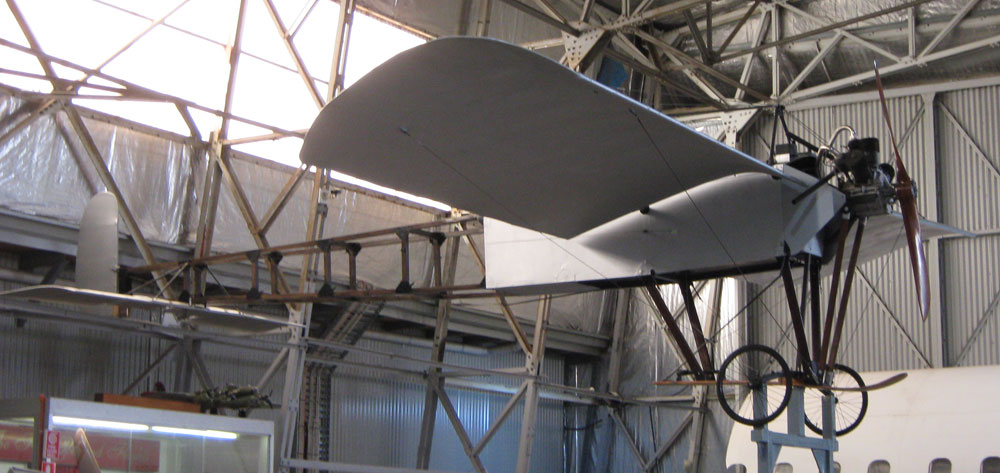
Cessna Silverwing Replica (named CC1 by Ross Engineering)
The design of the Cessna CC-1 was based on the Bleriot XI monoplane, which was the first aircraft flown in Australia by Carl (Bill) Witber at On 13 March 1910 in a paddock at Bolivar, South Australia. The Bleriot X1 monoplane had been imported by Adelaide businessman Fred Jones and had been on display prior to the flight at his Rundle Street store 'David Jones'.
SAAM's Cessna CC-1 replica was built by the staff of Ross Aviation Facilities at their Parafield workshop in Adelaide, South Australia. It was initially on display in their sales department. The replica was built in eight working days by foreman Gordon Lewis and eight staff, for just under $200 (excluding the engine). Hannan Bros., an Adelaide engineering firm, lent a 25 h.p. Anzani engine. This particular engine was originally installed in the first aircraft to fly in Australia, the Bleriot XI monoplane flown by Bill Witber. Cessna's original aircraft was powered by a 40 h.p. Anzani but it had not been possible to obtain one so the replica was never flown. The undercarriage wheels were manufactured by Super Elliott Cycles Ltd. also of Adelaide. Part of the main wheels are made from trotting gig parts.
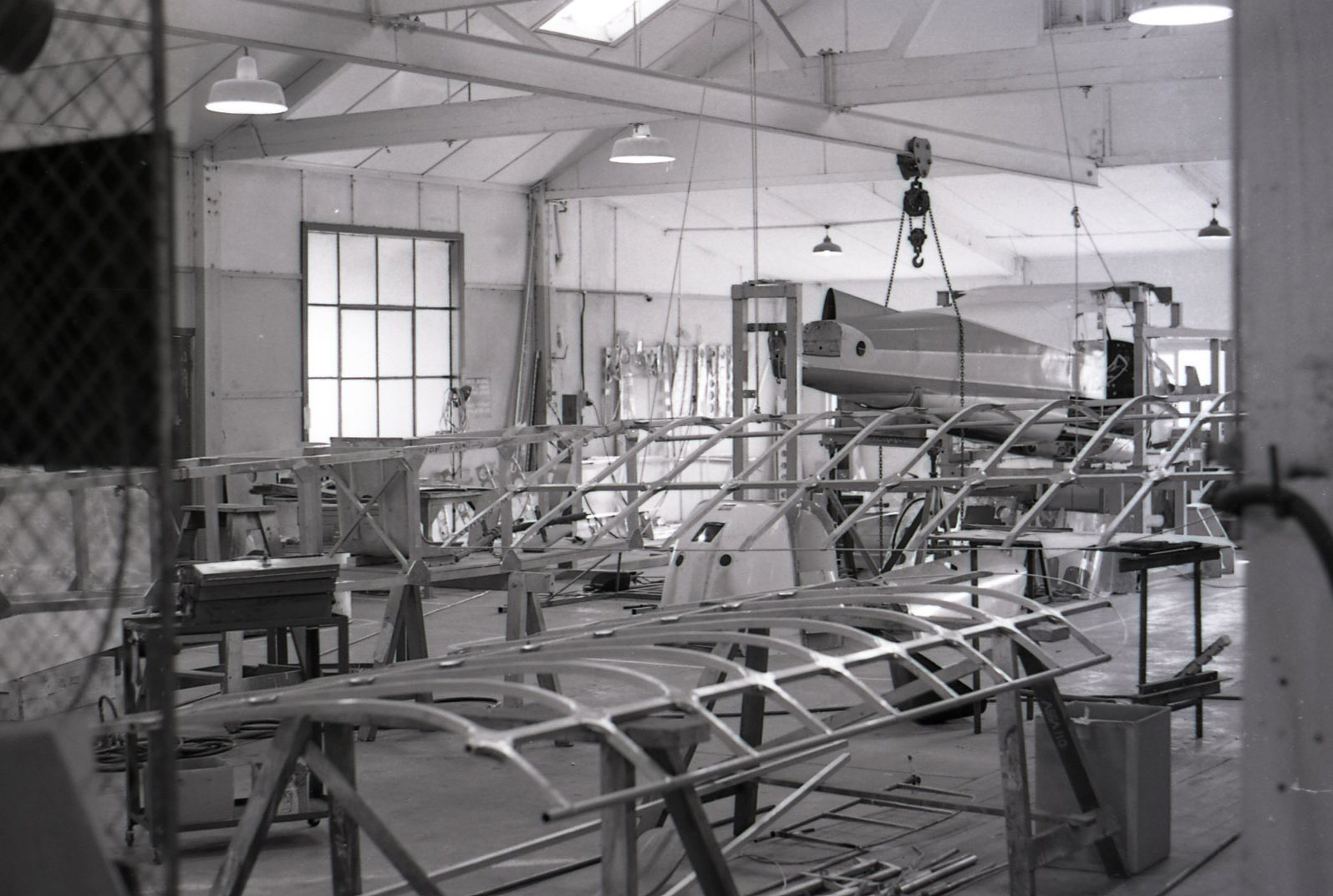
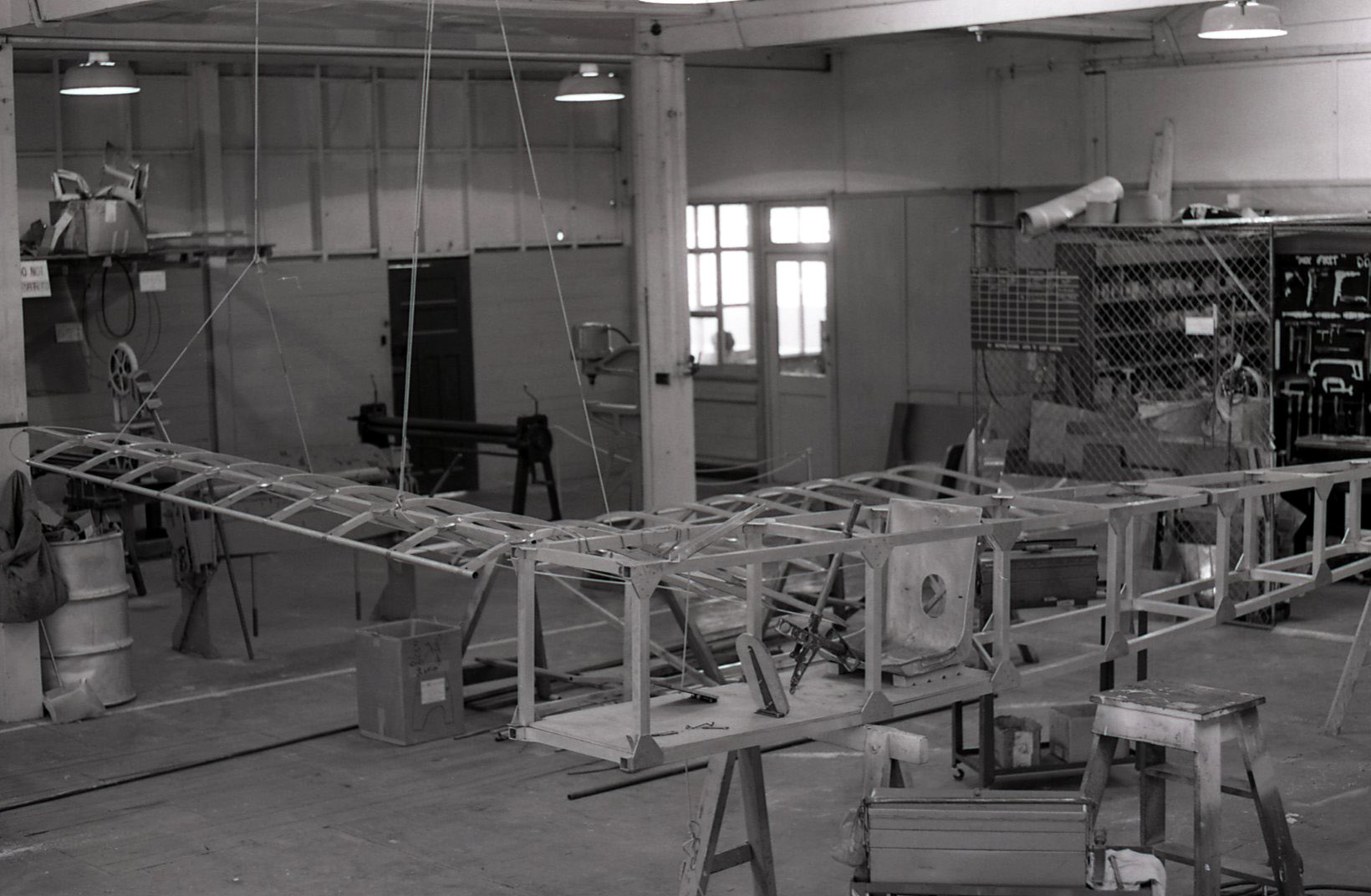
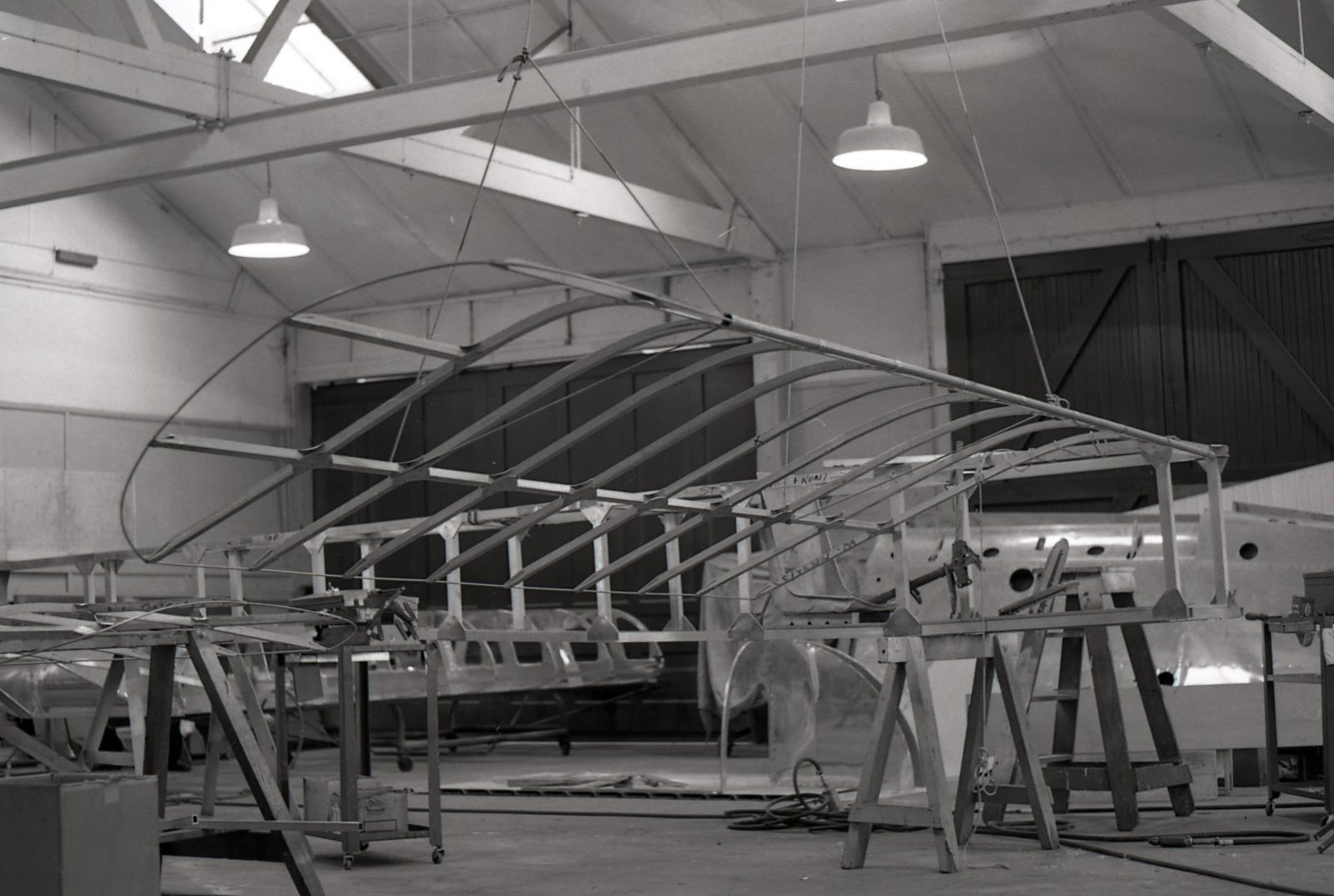
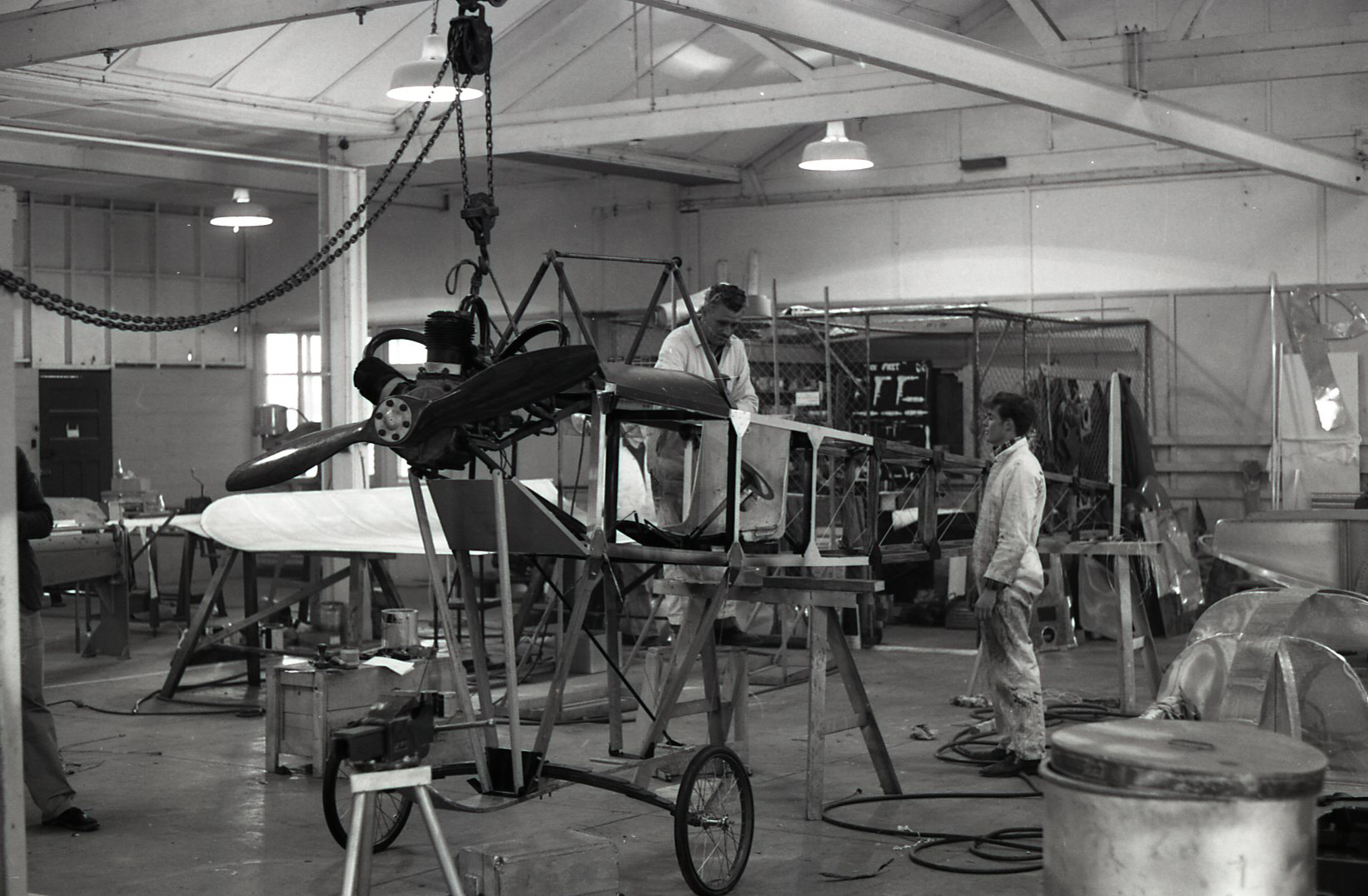
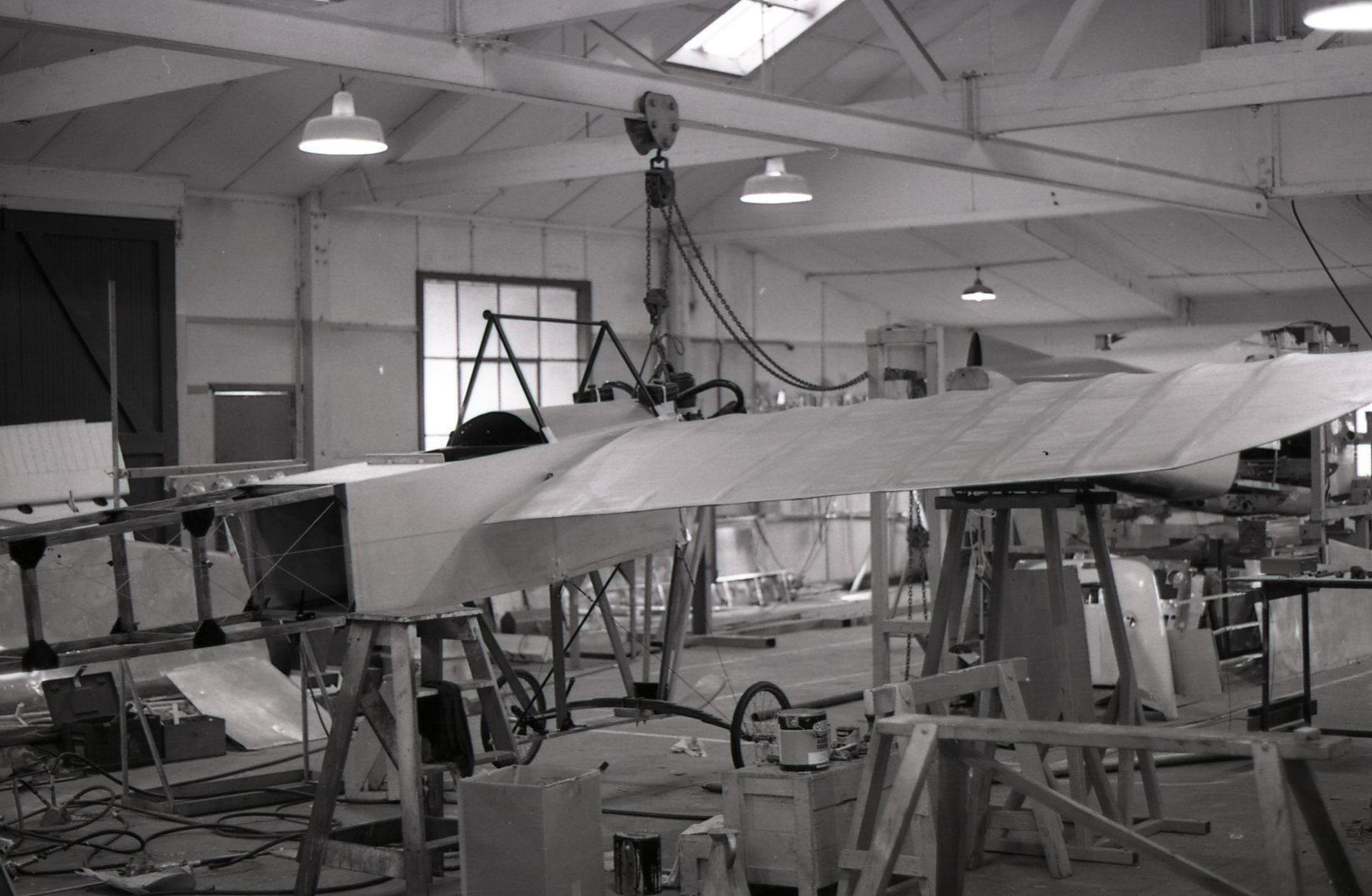
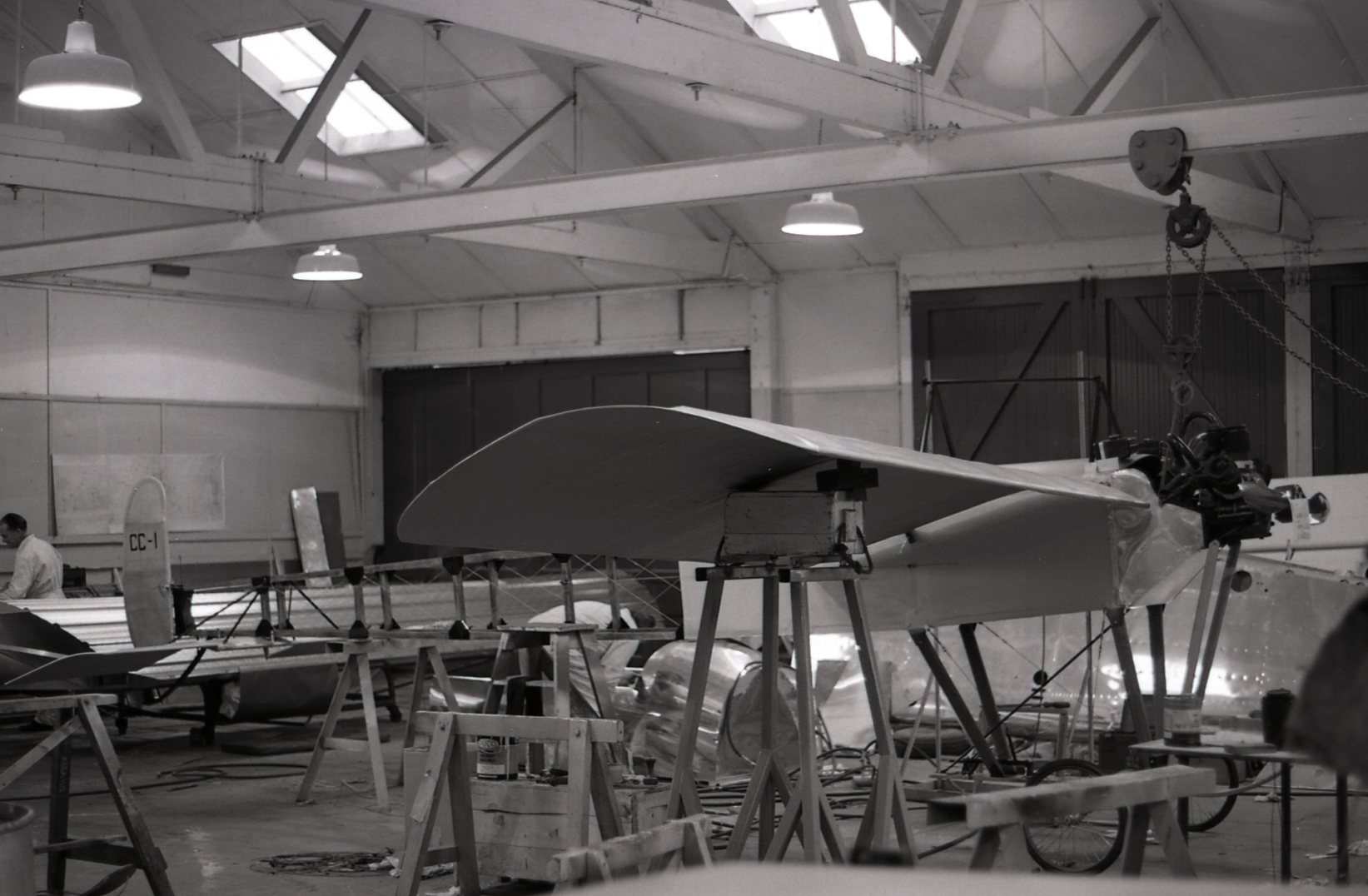
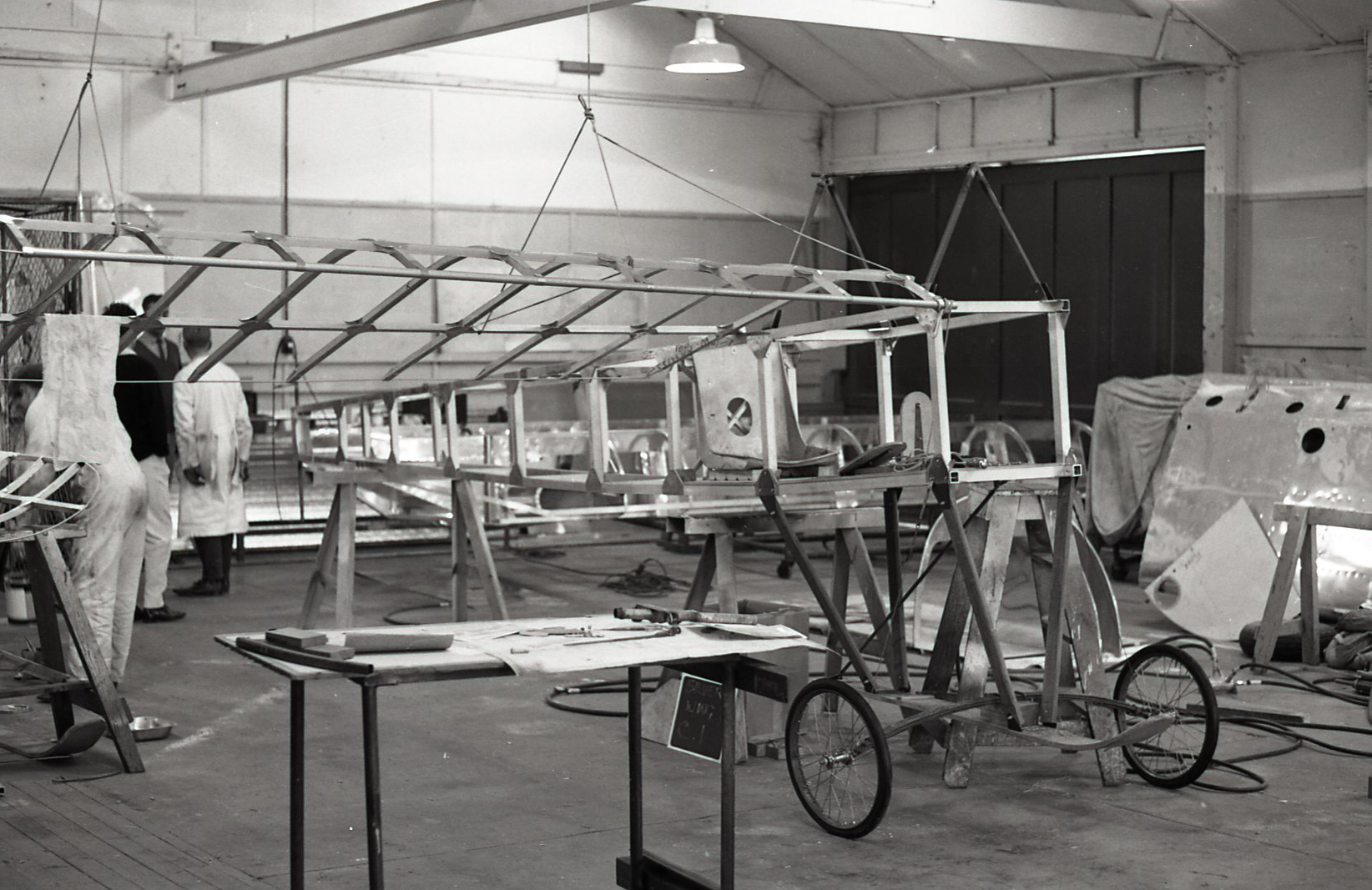
CC-1, as the replica was christened by Ross Aviation staff, is a faithful reproduction of the original airframe, apart from some minor modifications for improved flight safety. Some of the modifications were those made by Cessna on his later machines. The rudder has been slightly redesigned to make it more responsive. The surface area remains unchanged. To improve durability aluminium square tubing has replaced the original wooden framework.
The wire fuselage braces were tightened by the conventional fencing method. Flight control is maintained by means of flexible mainplanes and elevators. By flexing the control surfaces air is "spilt out", increasing or
decreasing lift as required. The rudder unit comprises the whole fin. A unique feature with early aircraft is the fully flying tailplane.
CC-1 TECHNICALSPECIFICATIONS
Length: 22 feet.
Wing Span: 22 feet.
Height 7 ft. 6".
Wing Area (approx.): 130 sq. ft.
Power Plant: 25 h.p. Anzani
Airscrew: Two bladed, wooden 5 feet diameter.
Undercarriage: 18" diameter main wheels with 20" x 1⅜" pneumatic tyres.
Metal tail skid.
Fuel: Petrol in two half gallon tanks.
Length: 22 feet.
Wing Span: 22 feet.
Height 7 ft. 6".
Wing Area (approx.): 130 sq. ft.
Power Plant: 25 h.p. Anzani
Airscrew: Two bladed, wooden 5 feet diameter.
Undercarriage: 18" diameter main wheels with 20" x 1⅜" pneumatic tyres.
Metal tail skid.
Fuel: Petrol in two half gallon tanks.
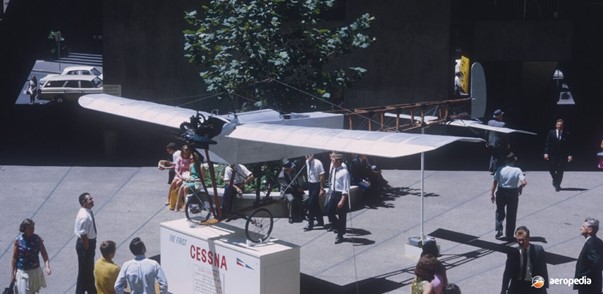
The Cessna CC-1 Replica was displayed at the 1966 National Air Show at Parafield and Edinburgh and in February 1968 it was on display at Australia Square, Sydney. Its subsequent location was not known for many years. It was believed to have been exported to the USA, but it had been placed in storage in a farmer's shed at Willaston, a suburb of Gawler, South Australia.
Cessna CC-1 was donated to SAAM on 13 January 2016 by the family of Gordon Lewis and was restored by SAAM members back to display condition. SAAM purchased an Anzani engine replica from a Hungarian manufacturer, which was delivered on 27 December 2016. The propellor was made by SAAM member Jim Pisconeri.

Cessna CC-1 was donated to SAAM on 13 January 2016 by the family of Gordon Lewis and was restored by SAAM members back to display condition. SAAM purchased an Anzani engine replica from a Hungarian manufacturer, which was delivered on 27 December 2016. The propellor was made by SAAM member Jim Pisconeri.