SAAM Aircraft
Historic aircraft, military aircraft and restoration projects at the South Australian Aviation Museum
Explore SAAM’s aircraft collection, including historic aircraft, jet fighters, military aircraft, helicopters, gliders, forward fuselages and aircraft under restoration or in storage.
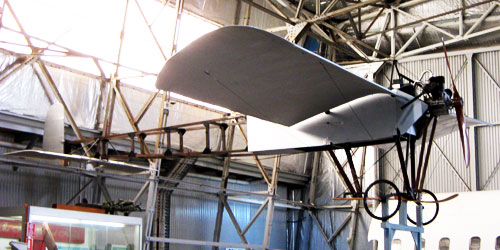
Cessna CC-1 Replica
The Cessna Silverwing, first flown by Clyde Cessna on August 11, 1911, was the inaugural aircraft he designed and built, eventually leading to the establishment of the Cessna Aircraft Company. A replica constructed by Ross Aviation Facilities was displayed at various locations before its disappearance for over 40 years. Rediscovered and donated to the South Australian Aviation Museum, it was restored by volunteers and is now on display in the museum's main hangar.
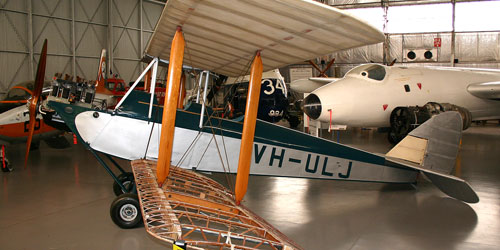
deHavilland DH-60G Gipsy Moth VH-ULJ
VH-ULJ, registered in 1929, initially served with Holden's Air Transport Services and later Guinea Airways, aiding the Bulolo goldfields' development by transporting miners and supplies. During the 1942 Japanese invasion, it was flown to Adelaide and later acquired by the South Australian Education Department for educational use. Now part of the South Australian Aviation Museum's collection since 1991, VH-ULJ is one of the few remaining aircraft linked to early air transport in the Bulolo goldfields.
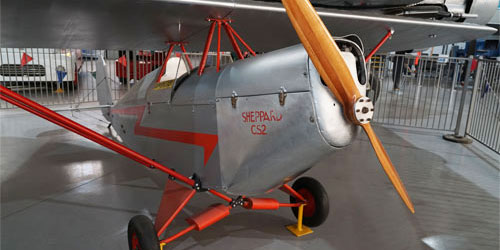
Sheppard CS2
The Sheppard CS2, designed by Adelaide watchmaker Clem Reginald Sheppard in the 1930s, exemplifies South Australian ingenuity. Built in his backyard, this single-seat aircraft features fold-back wings for towing. Test-flown by Royal Aero Club instructor Bill Maddocks, the CS2 remains a notable home-built aircraft, showcasing the innovation and resourcefulness of early aviation enthusiasts in South Australia.
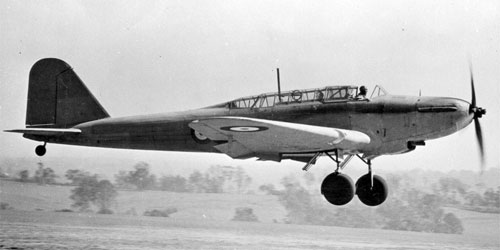
Fairey Battle N2188
Fairey Battle N2188, built in the UK and serving with the Royal Air Force from 1939, was later shipped to Australia in 1941 for air gunnery training at No. 2 Bombing and Gunnery School. After being abandoned in mangrove swamps, it deteriorated but was eventually recovered and is now a key restoration project at the South Australian Aviation Museum, highlighting its significance as a World War II survivor and training aircraft.
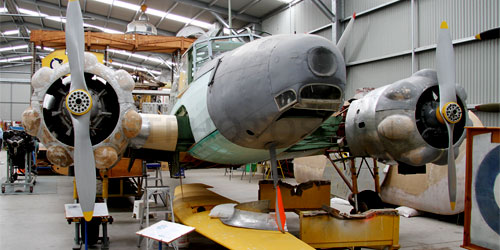
Avro Anson I EF954
During World War II, the Avro Anson was a key training aircraft for the Royal Australian Air Force, preparing thousands of aircrew. The specific aircraft, Avro Anson EF954, has ties to South Australia, having served at the RAAF station at Mallala before being donated to the South Australian Aviation Museum in 1984. It is significant to the museum's history, with ongoing restoration efforts reflecting volunteer dedication and preserving the legacy of this important training aircraft.
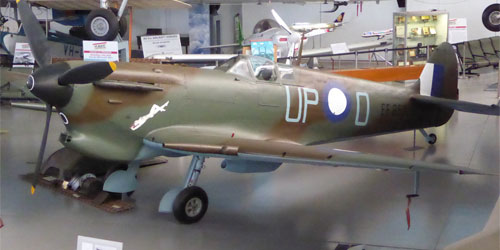
Supermarine Spitfire MK Vc EE-853 UP-O RAAF A58-146
This Spitfire, built by Westland Aircraft in 1942 and shipped to Australia in 1943, served with No. 79 Squadron RAAF in Papua New Guinea during World War II. After being damaged on Kiriwina Island, it was abandoned and exposed to the elements for years. In the 1970s, Langdon Badger recovered the aircraft, preserving a significant piece of Australia's aviation heritage. It is now on display at the South Australian Aviation Museum, representing the Spitfire's crucial role in the defence of Australia and the South West Pacific during the war.
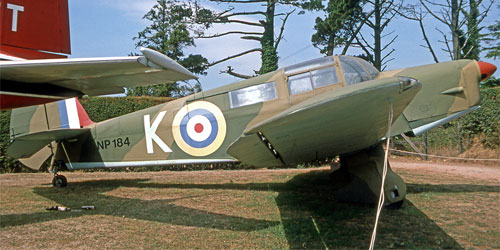
Percival Proctor RAF NP184
NP184, a Proctor IV built in Manchester, served in the Royal Air Force before transitioning to civilian ownership in the UK. Imported to Australia in 1990 and stored for years, it was acquired by the South Australian Aviation Museum in 2022 for preservation. Although not currently on display, NP184 is a significant example of the Proctor family, which was used by the RAF for various roles during and after WWII, and is part of the museum's collection pending conservation and restoration.
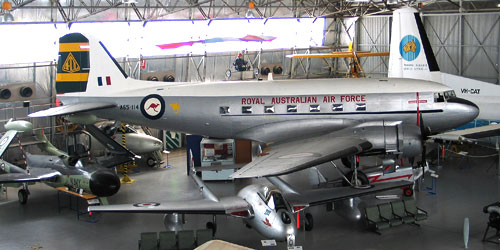
Douglas C-47B-35-DK Dakota A65-114
Delivered to the Royal Australian Air Force in June 1945, Dakota A65-114 served in various capacities, including repatriating Australian prisoners of war and VIP transport for Prime Ministers. It also supported the Aircraft Research and Development Unit. Currently, it is a prominent exhibit at the South Australian Aviation Museum, where visitors can explore its spacious cabin.
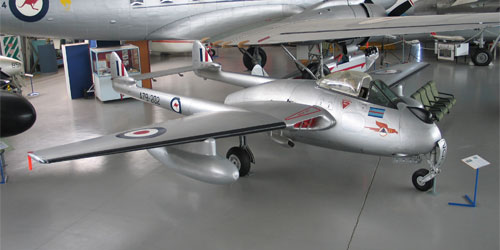
deHavilland DH-100 Vampire FB.31 A79-202
Vampire A79-202 was delivered to the Royal Australian Air Force in November 1951, serving at RAAF Base Williamtown and later with the Citizens Air Force. It then joined the Aircraft Research and Development Unit in Laverton for flight testing. After retiring, it was a gate guardian in North Adelaide before being transferred to the South Australian Aviation Museum in July 1989. The Vampire was significant as one of the RAAF's first operational jet fighters, marking the transition to the jet age and contributing to the development of Australia's post-war air force.
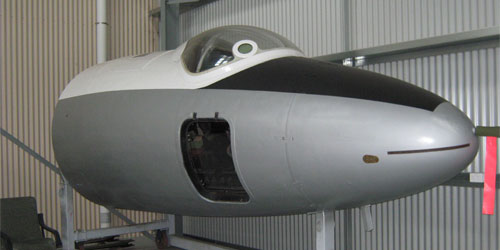
English Electric Canberra T4 WD954
WD954, originally a Canberra B.2 bomber delivered to the Royal Air Force in 1951, was later converted into a T.4 trainer and used in Australia for flight trials by the Weapons Research Establishment. Though only the forward fuselage remains, it has been restored by volunteers at the South Australian Aviation Museum, where it now highlights the Canberra's significant role in military aviation during the Cold War, featured prominently in the museum's Vietnam War display.
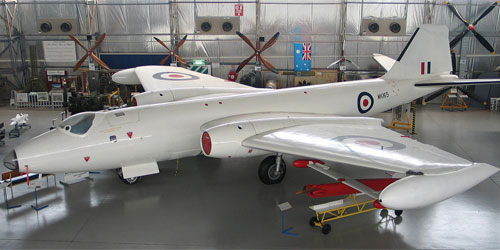
English Electric Canberra B2 WK165
Canberra WK165, constructed in the UK and delivered to the Royal Air Force in 1955, was later utilized by the Royal Australian Air Force at RAAF Base Edinburgh. It contributed significantly to defence research, including support for the Maralinga atomic tests and radar calibration at the Woomera Rocket Range. Currently, it is preserved at the South Australian Aviation Museum, symbolising its key role in Australia's Cold War defence initiatives.
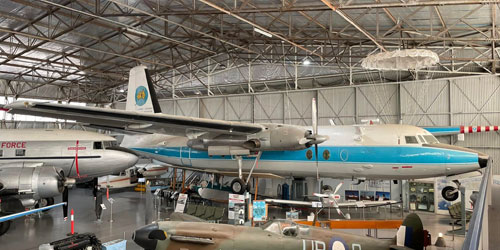
Fokker F27-109 Friendship VH-CAT
VH-CAT operated with the Department of Civil Aviation from 1959 to 1978, facilitating Australia's civil aviation development. Subsequently transferred to CSIRO for atmospheric research, it was later acquired by Australian Flight Test Services. Now preserved at the South Australian Aviation Museum, VH-CAT allows visitors to explore its main cabin and learn about its diverse roles in government and scientific applications.
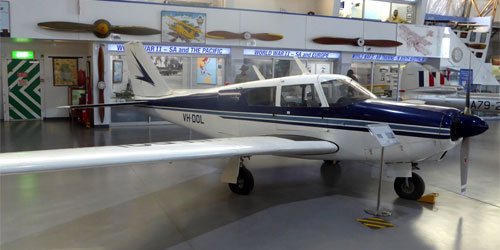
Piper PA-24-250/A1 Comanche VH-DOL
VH-DOL, manufactured by Piper Aircraft Corporation in 1959 and imported to Australia in 1962, became a prominent figure in private aviation. The aircraft competed in the 1969 London to Sydney Air Race and remained in service until 1992, showcasing the reliability of Piper planes. It is now preserved at the South Australian Aviation Museum, representing the high-performance touring aircraft that enhanced private and business flying in the post-war era.
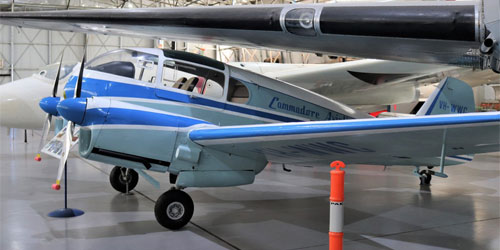
Aero 145 VH-WWC/ZCL
Manufactured in Czechoslovakia in 1961, the Aero 145 was imported to Australia in 1962 and served with Commodore Aviation in Port Lincoln for tasks like tuna spotting and transport to offshore islands. After being withdrawn from service in 1979, it was donated to the South Australian Aviation Museum, where it was restored and now preserved. The Aero 145 exemplifies the vital role of light aircraft in supporting regional communities in post-war South Australia.
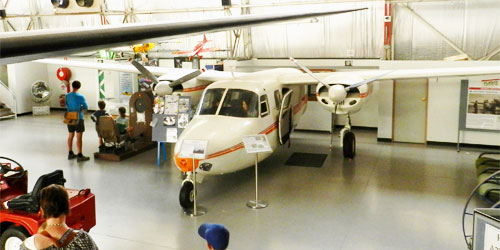
Aero Commander 680 VH-PSG
VH-PSG, registered in Australia in 1961, initially operated in the Snowy Mountains before moving to Adelaide in 1967. It had several owners before being used by Skytours Air Charter. In 1990, its cockpit section was acquired by the South Australian Aviation Museum, where it serves as an interactive exhibit that allows children to explore aviation through a hands-on cockpit experience, fostering curiosity about the aircraft's historical role in connecting Australian communities.
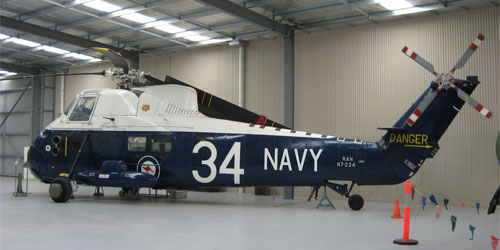
Westland Wessex HAS31B N7-224 WA224
WA224, a Westland Wessex helicopter, first took flight in 1963 and served in the Royal Australian Navy as an anti-submarine warfare and utility aircraft. It operated from HMAS Melbourne and HMAS Stalwart, bolstering Australia's maritime defence. Acquired by the South Australian Aviation Museum in 1998, WA224 is now preserved and symbolises a key period in Australia's naval aviation history, illustrating the Wessex's significance in fleet operations and the evolution to modern shipborne helicopters.
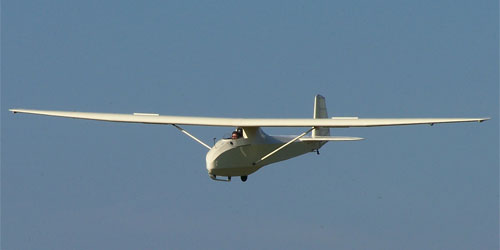
Schneider Grunau IV Glider VH-GDV
VH-GDV is a Grunau IV glider that has a significant history in Australia, flying with various clubs like Dubbo and Armidale. It logged 971 flying hours and 2,457 landings, showcasing its role in pilot training and recreational soaring. Now in storage, it is part of the South Australian Aviation Museum, symbolising the importance of gliding in Australian aviation.
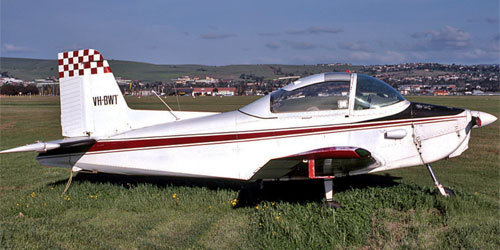
Victa Airtourer 100 VH-BWT
VH-BWT, registered to Victa Ltd in 1964, was sold to the Royal Aero Club of South Australia in 1966 and later owned privately by aerobatic pilots Chris Sperou and Ted Acres. Withdrawn from service in 1980, it became part of the South Australian Aviation Museum's collection and has been restored by volunteers. The aircraft symbolizes a significant period in Australian light aircraft design and sport aviation, particularly in the 1960s and 1970s.
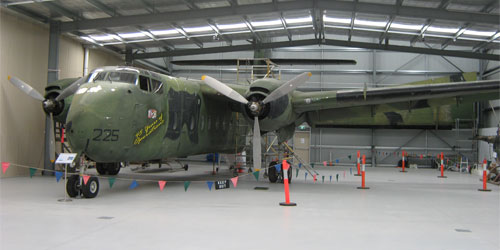
deHavilland Canada DHC-4 Caribou A4-225
Caribou A4-225 was introduced to the Royal Australian Air Force in June 1965, primarily serving with No. 38 Squadron at RAAF Base Richmond and in Papua New Guinea. It provided critical tactical airlift support until its retirement in 2009, after which it was preserved by the South Australian Aviation Museum. Visitors can now explore its cargo cabin, highlighting its contribution to the Australian Defence Force over four decades.
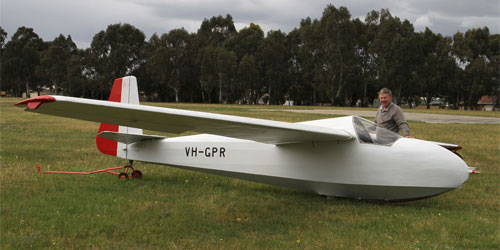
Hall Cherokee II Glider VH-GPR
The Hall Cherokee II is a homebuilt glider designed in 1966, with VH-GPR constructed in Deniliquin, New South Wales. It was later operated by Lloyd Stewart in Locheil, South Australia, highlighting the region's recreational soaring tradition. Now preserved at the South Australian Aviation Museum, VH-GPR embodies the craftsmanship and enthusiasm of Australia's gliding community, which has inspired many pilots in the pursuit of silent flight.
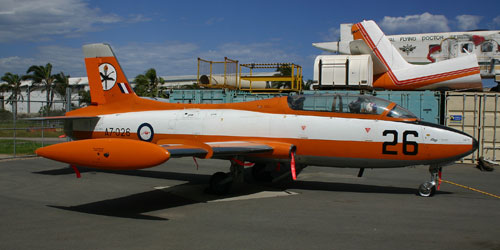
Aermacchi MB-326H/CAC CA-30 A7-026
A7-026, manufactured in Australia in 1968 by the Commonwealth Aircraft Corporation, served as a Macchi jet trainer for the Royal Australian Air Force. It operated with the Central Flying School at RAAF Base East Sale and later with the RAAF Roulettes from 1970 to 1985, showcasing Air Force pilots' skills at airshows. Currently, A7-026 is preserved at the South Australian Aviation Museum, symbolising Australia's jet training and aerobatic heritage.
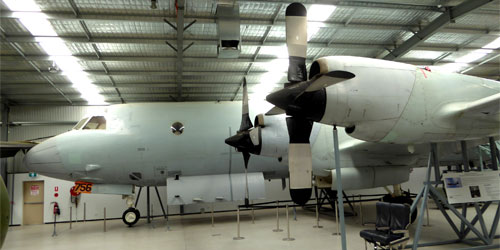
Lockheed AP-3C Orion A9-756
A9-756 served in the Royal Australian Air Force as part of No. 92 Wing, undertaking maritime patrol, anti-submarine warfare, and long-range surveillance missions to support Australia's defence. Upgraded to AP-3C standard, it improved its operational capabilities. After retirement, it was acquired by the South Australian Aviation Museum in 2017, reassembled by volunteers, and now stands as a major exhibit reflecting over four decades of the Orion's contributions to Australia’s maritime defence and regional security operations.
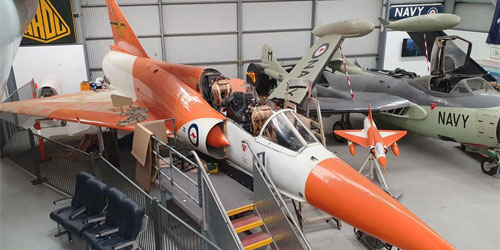
Dassault/Government Aircraft Factory Mirage IIID A3-115
A3-115 is a two-seat Mirage IIID operational conversion trainer delivered to the Royal Australian Air Force in December 1973. It served with No. 2 Operational Conversion Unit, No. 77 Squadron, and the Aircraft Research and Development Unit (ARDU) until its retirement in 1986. The aircraft is now preserved at the South Australian Aviation Museum, displaying its historical significance in defending Australian airspace and training RAAF pilots during the Cold War.
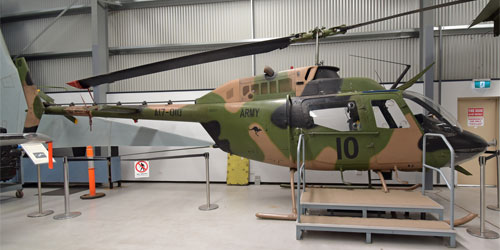
Bell 206B-1 / OH-58A Kiowa A17-010
A17-010, built in Fort Worth and delivered to the Royal Australian Air Force in January 1972, served with No. 161 and No. 162 Squadrons, performing light observation and utility duties. After retirement, it was preserved by the South Australian Aviation Museum. The helicopter exemplifies the Bell Kiowa's significant role in Australian military aviation, noted for its agility, reliability, and versatility over more than three decades.
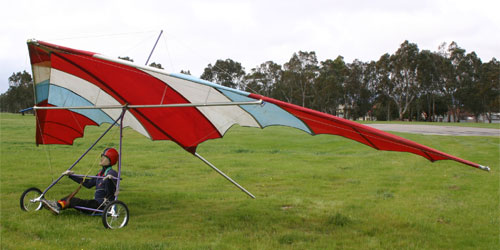
Twister 134 Hang Glider
This Twister 134 hang glider, flown by South Australian pilot Wayne Blackmore, celebrates his pivotal role in advancing hang gliding in Australia. As a founding member of the Hang Gliding Association of South Australia and first President of the Hang Gliding Federation of Australia, Blackmore significantly contributed to the sport's development. The glider, now preserved at the South Australian Aviation Museum, honours the growth of recreational aviation in the state during the 1970s and 1980s, encapsulating a vibrant chapter of aviation history and inspiring future pilots.
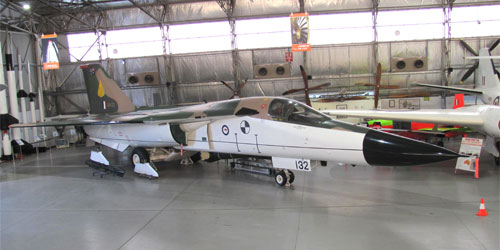
General Dynamics F-111C A8-132
A8-132 was delivered to the Royal Australian Air Force in 1973 and served with the Aircraft Research and Development Unit from 1979 to 1988, playing a crucial role in testing new aircraft systems and weapons. It contributed to the development of guided and unguided weapons for the RAAF's F-111 fleet. Currently, A8-132 is preserved at the South Australian Aviation Museum, representing significant contributions to Australian defence research and testing during the Cold War and beyond.
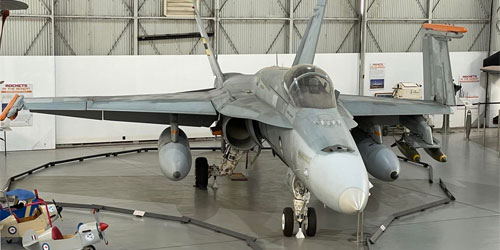
McDonnell Douglas / Boeing F/A-18A Hornet A21-32
A21-32, built in 1981, was one of two RAAF Hornets equipped with specialised flight test instruments. After serving No. 3 Squadron, it joined the Aircraft Research and Development Unit, contributing to various flight tests and weapons evaluations, particularly at Woomera Range Complex. Its testing role marks it as a historically significant F/A-18 Hornet, aiding the advancement of the Hornet fleet. In 2022, A21-32 was delivered to the South Australian Aviation Museum, symbolising Australia's achievements in military aviation and aerospace technology.
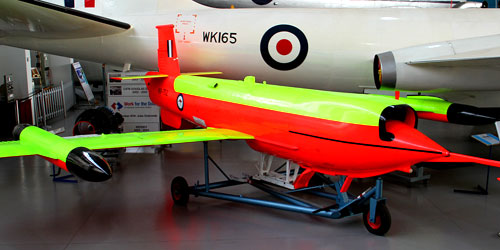
Government Aircraft Factory Jindivik N11-752y
SAAM's Jindivik, a Mark 203B target drone delivered to the Royal Australian Navy in 1987, marked Australia's successful aircraft production program. It served in target, surveillance, and missile simulation roles for Australia, the UK, and Sweden. The operational career ended in 1992 due to a crash. After storage, it was acquired by the South Australian Aviation Museum in 2004, showcasing its significance in aerospace technology and the pivotal role of remotely piloted aircraft in defence research and weapons testing.
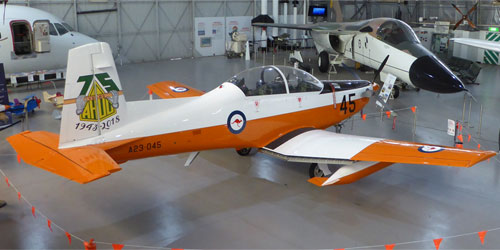
Pilatus PC-9/A A23-032
A23-032 served the Royal Australian Air Force primarily as a pilot training aircraft and later joined the RAAF Roulettes for air displays. It served as a Forward Air Controller aircraft until its retirement in 2019. Post-retirement, it was refurbished for static display at the South Australian Aviation Museum, celebrating the Aircraft Research and Development Unit's connection to RAAF Base Edinburgh. The aircraft exemplifies the versatility of the Pilatus PC-9/A, having fulfilled multiple roles in over three decades of service.
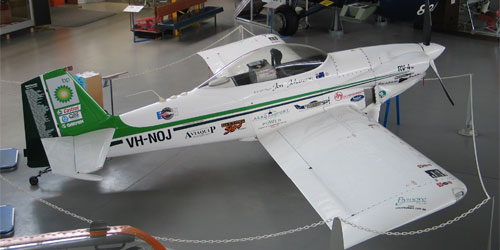
Van’s RV-4 VH-NOJ
VH-NOJ is a Van's RV-4 kit-built by Australian aviator Jon Johanson in 1992. Johanson completed three round-the-world flights, setting long-distance records and becoming the first to fly a single-engine aircraft over the South Pole. These feats showcase exceptional piloting and the craft's capabilities, securing VH-NOJ's importance in Australian aviation. It is currently preserved in the South Australian Aviation Museum as a notable civil aviation exhibit, symbolising innovation and adventure.
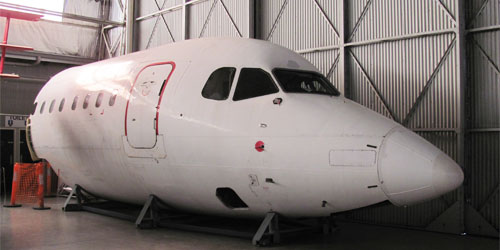
British Aerospace BAe 146-300 VH-NJL
Manufactured in the UK in 1992, VH-NJL was leased to National Jet Systems in 1994 and later operated by Cobham Aviation Services for regional flights in Australia. After retiring in May 2017, Cobham donated it to the South Australian Aviation Museum, where the preserved fuselage allows visitors to explore the passenger cabin and flight deck, highlighting its role in connecting Australian communities and supporting regional air transport.
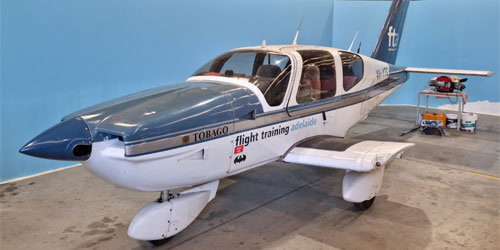
Socata TB-10 Tobago VH-YTG
VH-YTG, manufactured in France in 1992, was operated by Flight Training Adelaide for pilot training until its retirement in 2018. It was donated to the South Australian Aviation Museum, where volunteers have prepared it as an interactive exhibit. Visitors can now experience the cockpit firsthand and appreciate the aircraft's role in training commercial pilots.
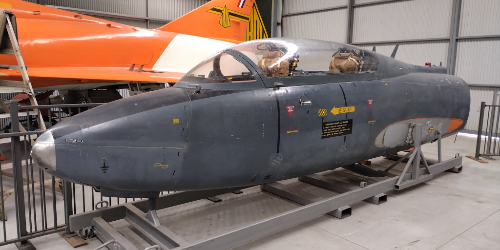
Aermacchi MB-326H/CAC CA-30 Nose
Aermacchi MB-326H A7-070, built by the Commonwealth Aircraft Corporation as
CAC30-070, first flew on 6 April 1970 and was delivered to the RAAF on 6 May 1970. It
served with 2FTS and 76SQDN before being transferred to the RAAF School of Technical
Training in Wagga Wagga as a training aid. The forward fuselage was stored at RAAF
Point Cook and later gifted to the South Australian Aviation Museum in June 2023. After
restoration, it is now displayed mounted on a frame, allowing it to be showcased at
events like airshows.